



Understanding liquidity is the most important skill for a trader. Liquidity tells you a story about where the market wants to go next. Most traders lose money because they do the opposite of what liquidity suggests. And they become the liquidity for the market.
The ultimate guide to liquidity trading strategy will save beginner and professional traders from costly mistakes and teach them how to read the intention of the financial markets.
What is liquidity?
Liquidity represents the orders sitting in the market. In the simplest terms, liquidity is found at swing highs and swing lows. These are the points on a chart where the price turned around. Above every swing high, there are buy orders. Below every swing low, there are sell orders.
You can also find liquidity at the highs and lows of previous candles. For example, a previous daily high or a previous 4-hour low contains liquidity.
These levels are fractal. This means a candle high on a daily chart often looks like a swing high on a 1-hour chart. For this guide, we will focus on swing points because they provide the clearest signals for most traders.
Liquidity explained:
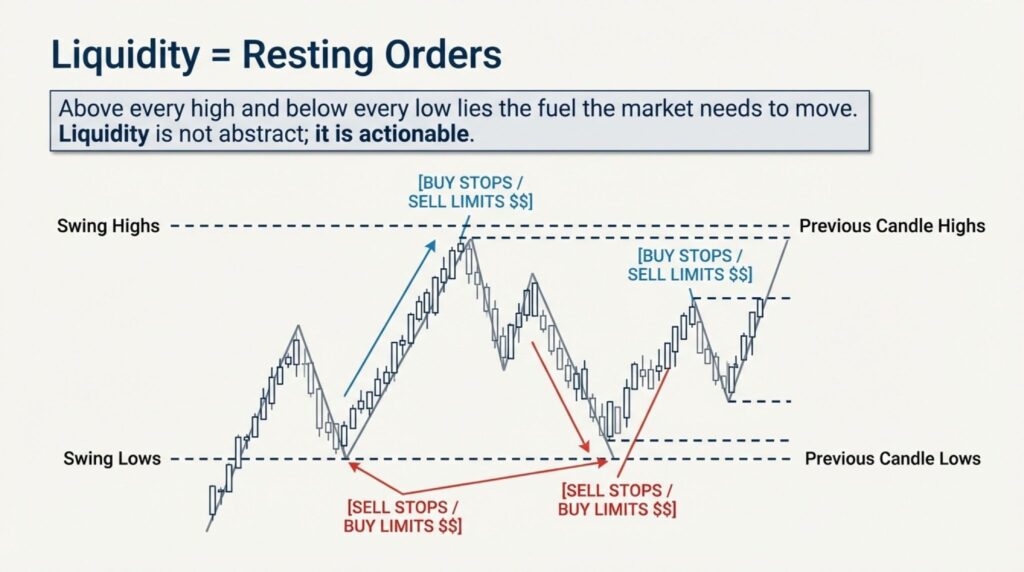
USDCAD Daily Price Chart:
A live example of liquidity is explained below
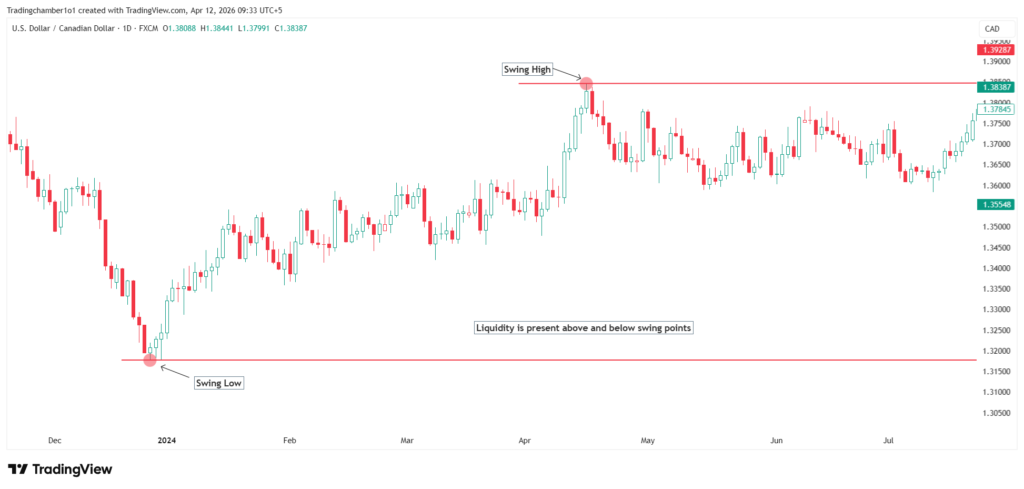
The illustration above is a general explanation of liquidity. There are a lot of concepts & combinations related to liquidity on the internet. Here we can discuss only the most fundamental ideas. That is beginner-friendly and easy to understand.
Two Ways Price Interacts With Liquidity:
We can discuss more about the behaviors of liquidity. Which is liquidity sweep and run.
When price reaches a swing high or a swing low, only two things can happen. You must learn to tell the difference between them.
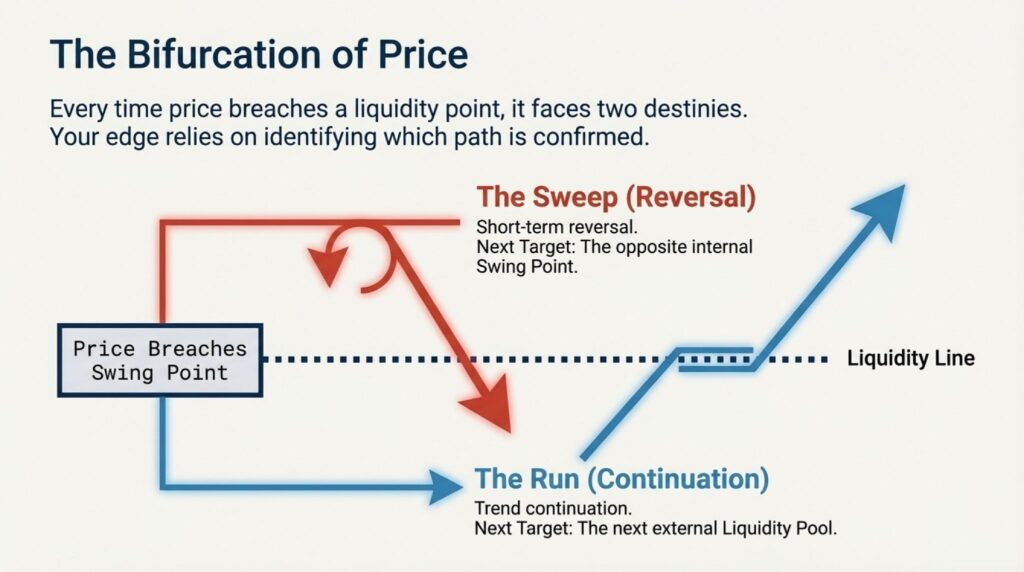
- A Sweep of Liquidity: Price trades past a level but then quickly rejects it. This acts like a fake-out and usually leads to a reversal.
- A Run on Liquidity: Price trades past a level and stays there. It keeps moving in that same direction. This is a sign of continuation.
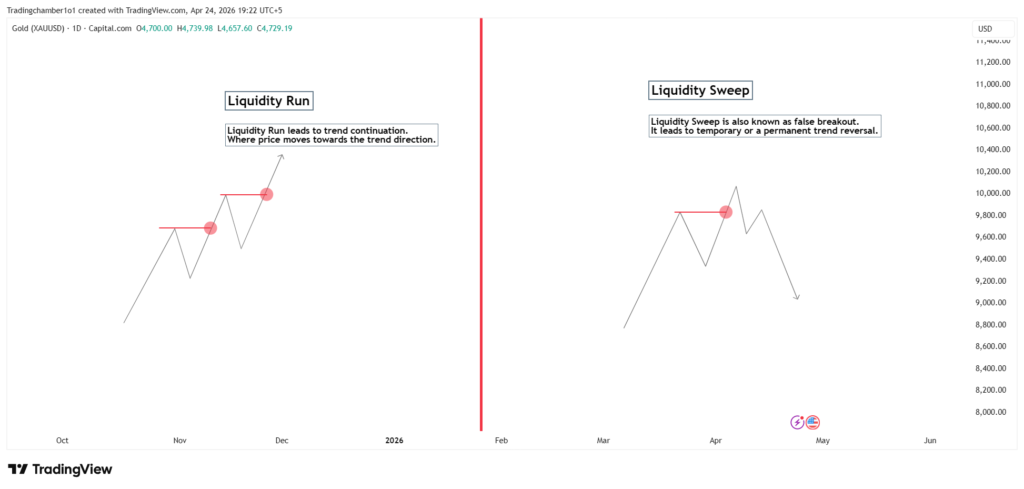
If you understand which one is happening, you will know the next target. This guide will show you how to read the market like an institution and avoid common mistakes that lead to losses.
Example of Liquidity Run:
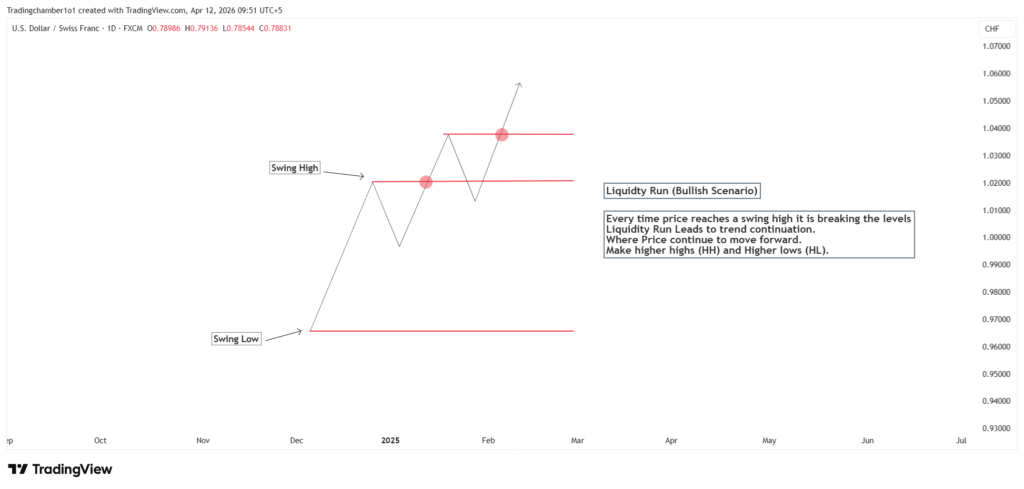
In a Bullish Scenario:
- Every time the price reaches a swing high, it breaks that level and continues towards the projected direction.
- Liquidity run leads to trend continuation.
- Where price continues to move forward.
- Make higher highs (HH) and higher lows (HL).
Profit target for a liquidity run:
If the price runs through a swing high, the next target is likely the next high further up.
Quick note: Want to know about market structure? Read this blog on market structure.
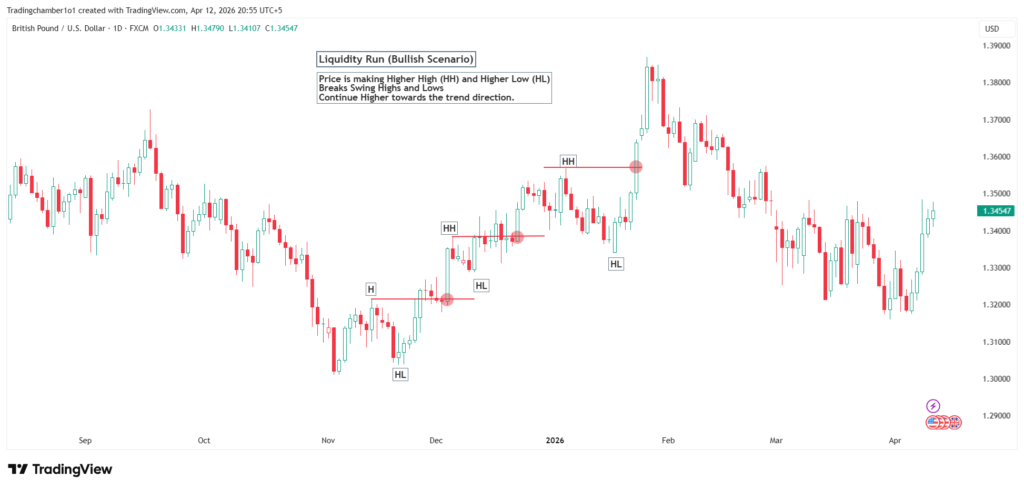
GBPUSD Daily Price Chart:
A Live example of a bullish liquidity run is explain below
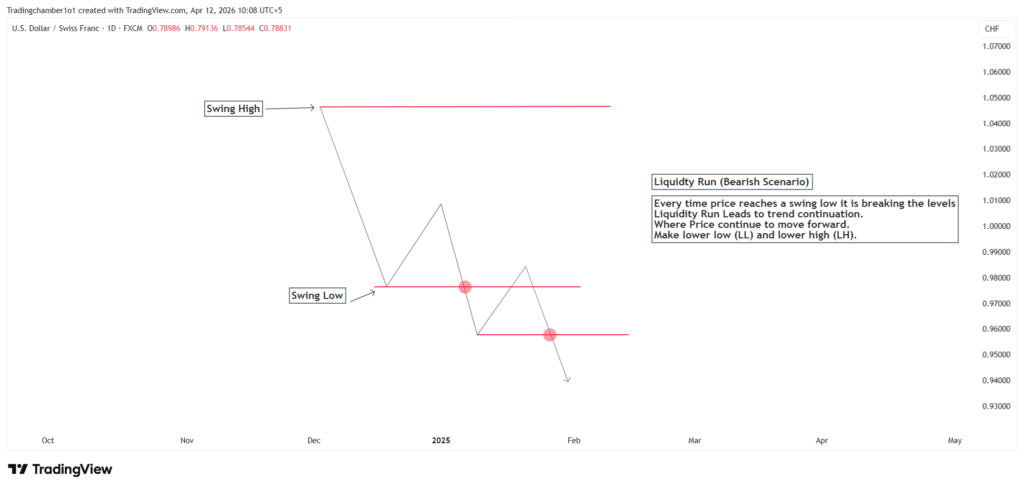
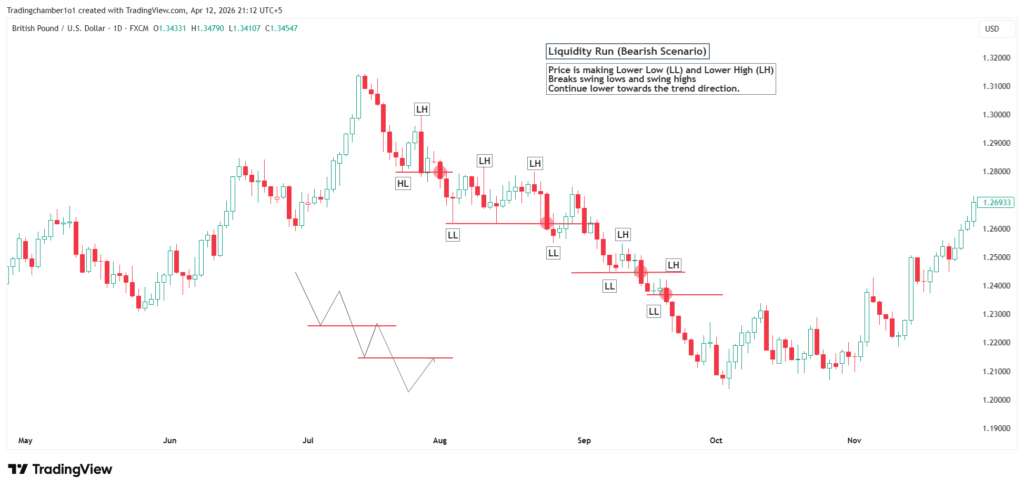
In a Bearish Scenario:
- Every time the price reaches a swing low, it breaks that level and continues towards the projected direction.
- Liquidity run leads to trend continuation.
- Where price continues to move forward.
- Make lower lows (LL) and lower highs (LH).
GBPUSD Daily Price Chart:
A Live example of bearish liquidity run is explain below
Example of Liquidity Sweep:
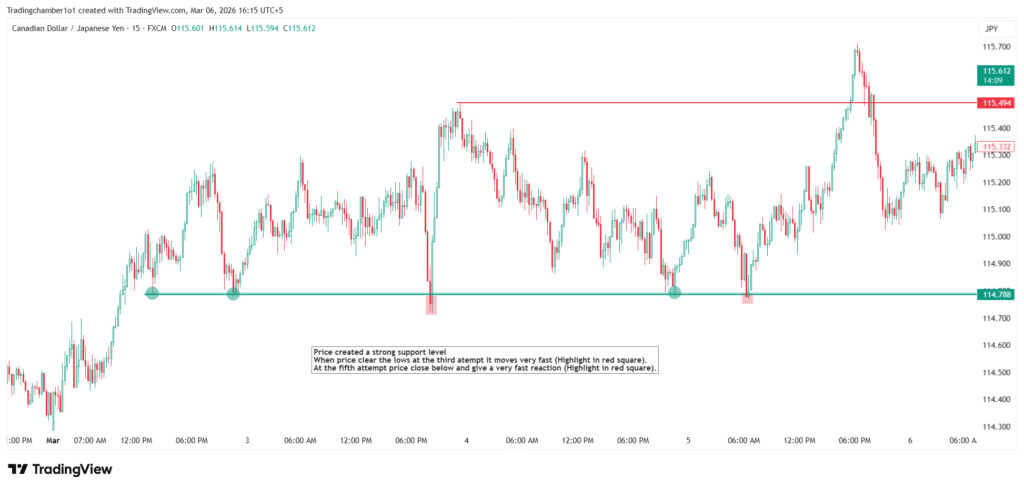
In a Bullish Scenario:
- Every time the price reaches a swing low, it reverses its direction.
- A liquidity sweep leads to a trend reversal.
Profit target for a liquidity sweep:
If a price sweeps a high, the next target is likely a low.
CADJPY 15min Price Chart:
A live example of bullish liquidity sweep is explain below
For a bearish scenario it is the opposite.
Rules for validating liquidity run and sweep:
Criteria for confirming whether prices run or sweep. We do not trade blindly based on the patterns alone; there is market intention behind every price move. Liquidity tells us the direction.
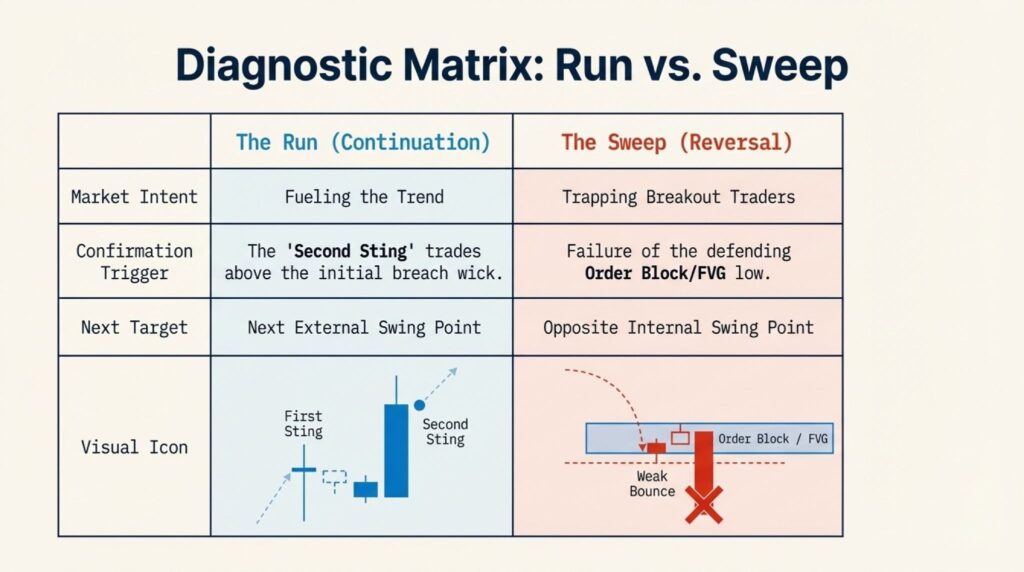
How to Confirm a Run on Liquidity:
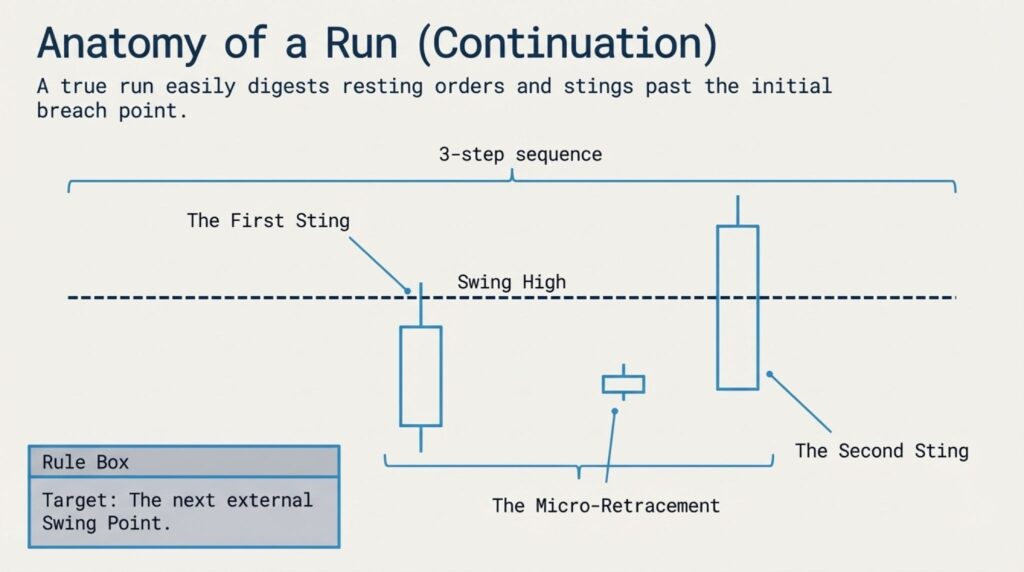
Confirming a run is straightforward. You are looking for a specific pattern called the two-sting pattern. This helps you see if the market is actually strong enough to keep going.
If you want to dig deep into this framework, click the link and you will be directed towards the Arjo Liquidity masterclass.
The First Sting
The first sting happens when price trades above a swing high or below a swing low for the first time. Do not jump in immediately. You need more information to be sure it is not a trap.
The Retracement
After the first sting, price often pulls back. This might be a single candle or a small wick. This happens because some traders are taking profits or others are trying to fade the move.
The Second Sting
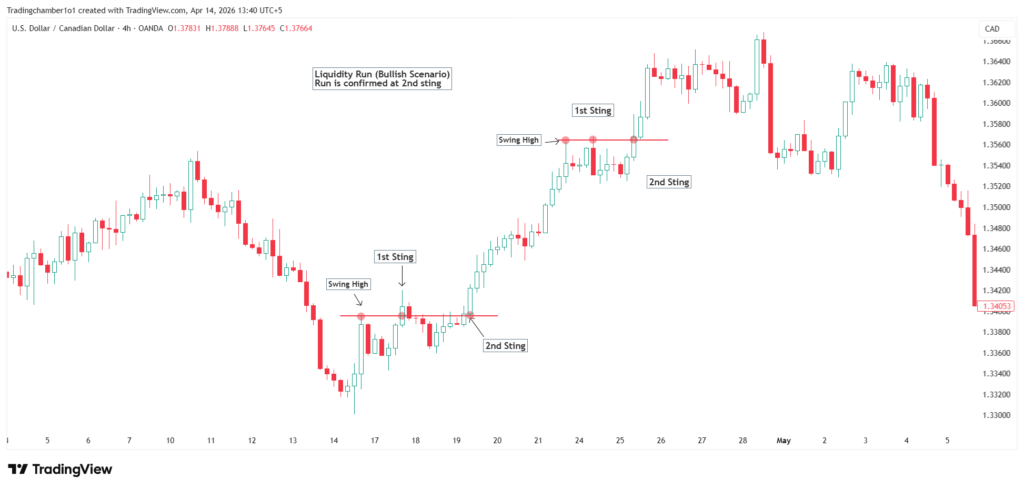
The second sting is your confirmation. This happens when the price moves back past the first sting and continues in the original direction. If you see a first sting, a small pullback, and then a second sting; the market is running liquidity. You can now look for the next target in that same direction.
| Steps | Action | Meaning |
| 1 | First Sting | The price hits the liquidity level. |
| 2 | Retracement | A small move in the opposite direction. |
| 3 | Second Sting | Price breaks the first sting level. |
| Result | Liquidity Run Confirmed | Price will likely hit the next target. |
Live Examples:
USDCAD 4H Price Chart:
A live example of a bullish liquidity run confirmed with two sting pattern.
How to Confirm a Liquidity Sweep:
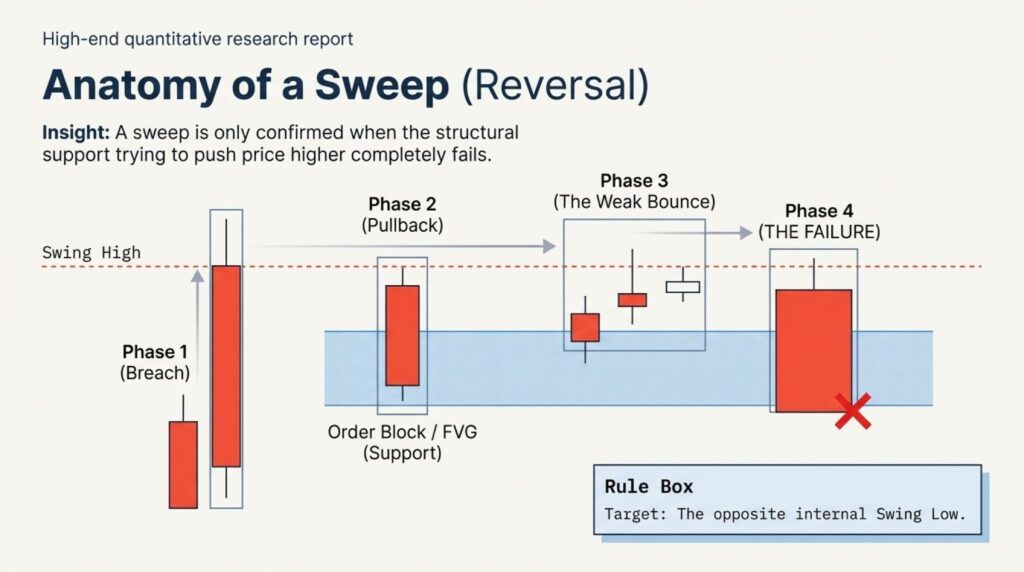
A sweep is a bit more complex. To confirm a sweep, you need to look at PD arrays.
These are levels like fair value gaps (FVG) and order blocks (OB).
Price always has a reason to reverse, and these levels provide that reason.
The Battle Between Levels
Imagine a price trades above a swing high. The swing high wants to push the price down. At the same time, there is often a fair value gap or an order block below that wants to push price up. This creates a battle.
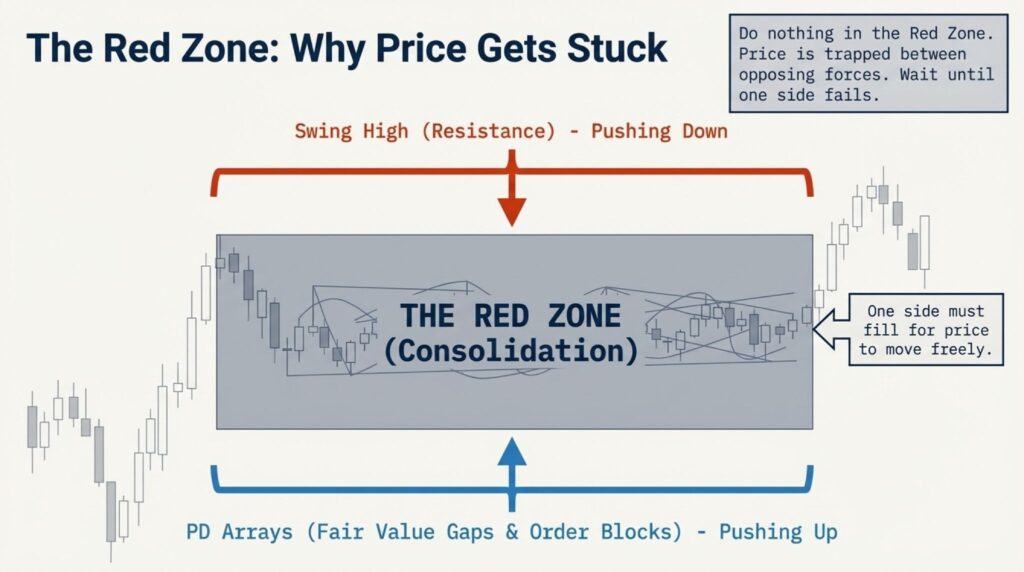
Price often gets stuck in a “red zone” between these two levels. This looks like a consolidation or a tight range. You should not trade when the price is stuck. You must wait for one side to fail.
The Confirmation of the Sweep
A sweep is confirmed when the supporting levels fail. If price trades above a high but then breaks below the order block that was pushing it up, the sweep is real.
The bullish side has lost the battle. This confirms a short-term reversal. Your new target is the low of the order block or the next swing low.
Live Examples:
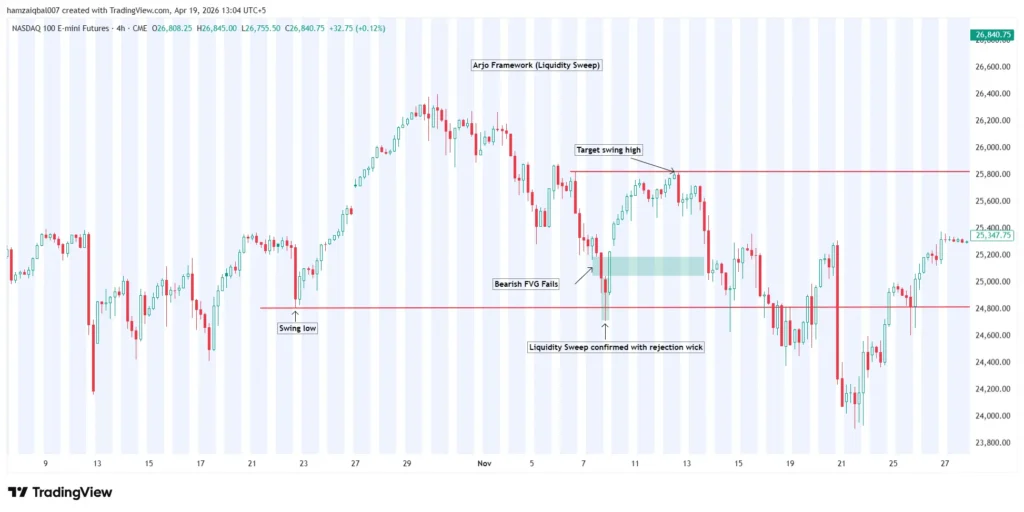
NASDAQ 100 E-mini Futures 4H Price chart:
A live example of a liquidity sweep (Bullish Scenario) with PD arrays.
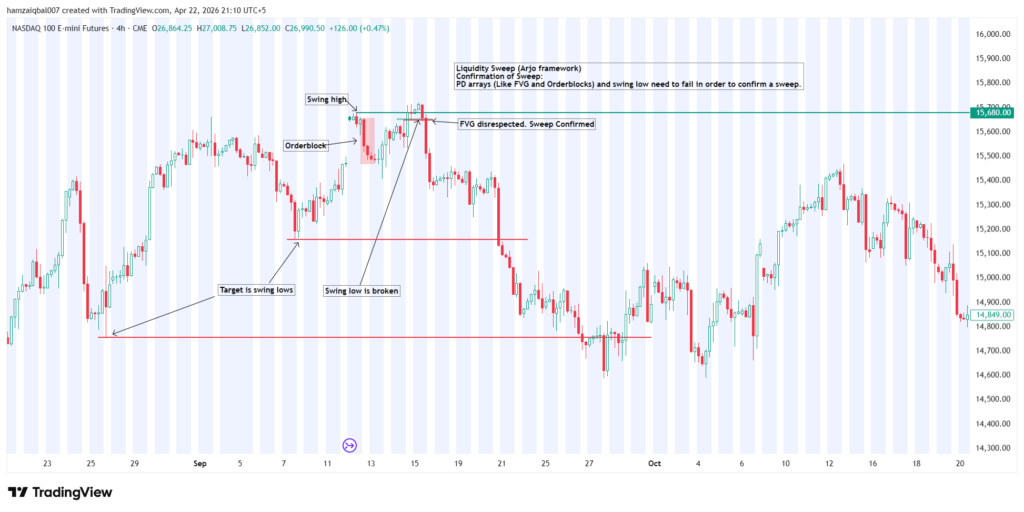
NASDAQ 100 E-mini Futures 4H price chart:
Another live example of liquidity sweep (Bearish Scenario)
Quick little comparison:
The Institutional Story Behind the Move
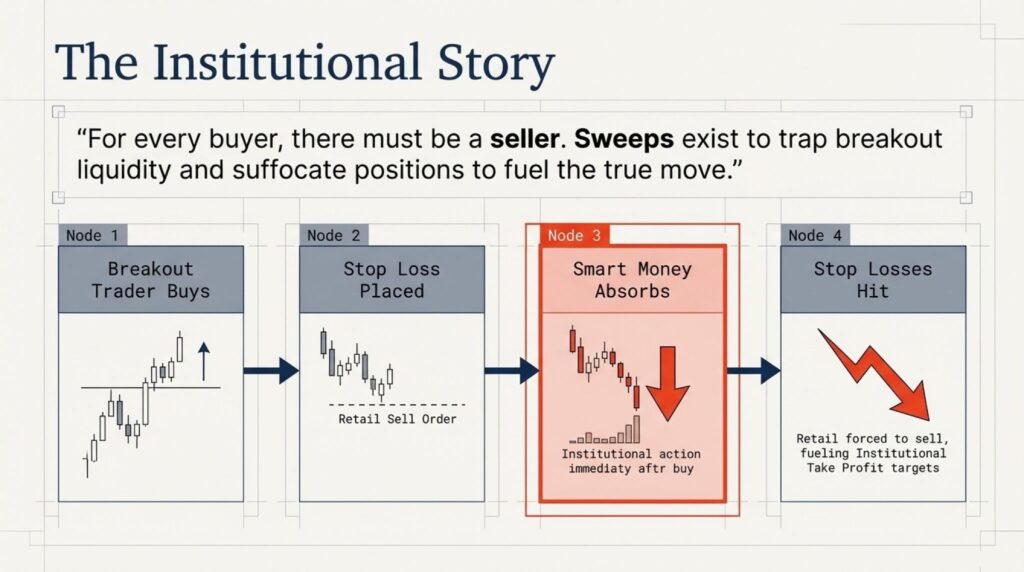
To trade like a pro, you must think about who is on the other side of your trade. Markets move because orders must be matched. For every buyer, there must be a seller.
Breakout Traders
Many traders use breakout strategies. When the price breaks above a swing high, they buy. They think the market is strong.
Large institutions often use these breakout buy orders to fill their own sell orders.
If an institution wants to sell a massive position, they need a lot of buyers. They find those buyers at swing highs.
This is why price often sweeps high and then crashes. The institution filled their “sell” orders using the breakout “buy” orders.
Suffocating Positions
If a price sweeps a high and moves down quickly, the breakout traders are now at a loss. Their stop losses are sell orders. As price hits their stops, it adds more fuel to the move down. This is called suffocating a position.
In a run, price does not need to suffocate the other side. It is comfortable staying above the high because the trend is genuinely strong. Understanding this intent helps you stay on the right side of the move.
Using Liquidity to Identify the Trend:
The trend is simply a series of runs and sweeps. You can define the trend objectively by watching what happens at swing points.
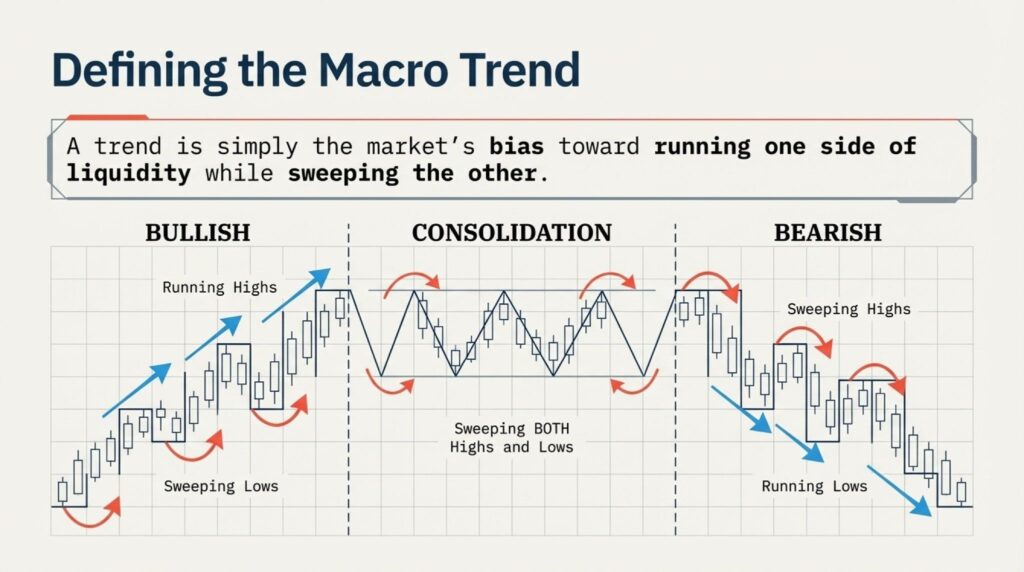
- Bullish Trend: The market is running swing highs and sweeping swing lows. This shows the buyers are in total control.
- Bearish Trend: The market is running swing lows and sweeping swing highs. This shows the sellers are in total control.
- Consolidation: The market is sweeping both highs and lows. It is not running on either side. The price is stuck, and you should probably wait.
A reversal happens when the pattern changes. If you have been running lows but then start sweeping a low and running a high, the trend has shifted. This allows you to catch new moves early.
Avoiding Silly Losses
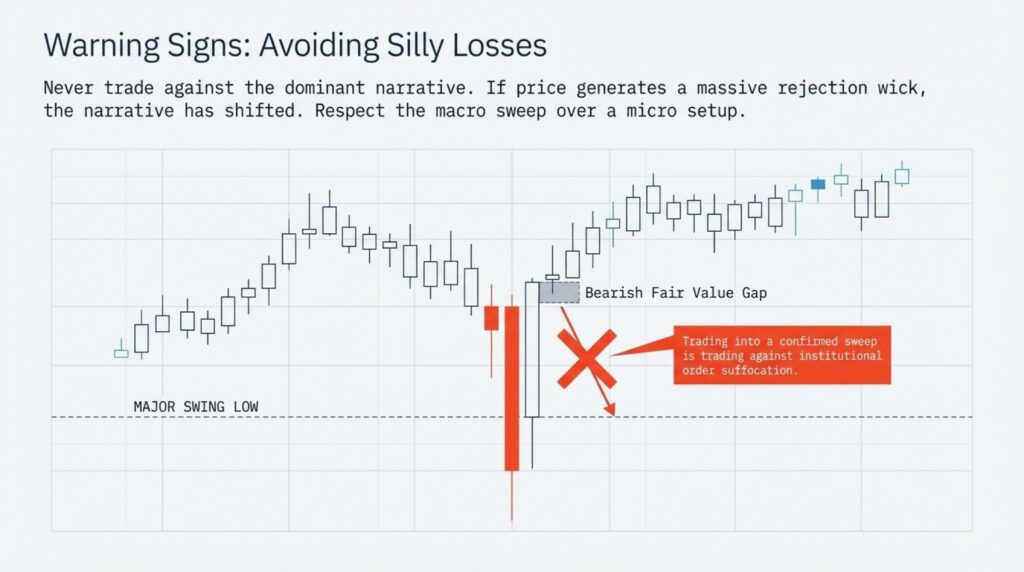
Most “silly losses” happen when you trade against a potential sweep. If price reaches a major 4-hour swing low and shows a large rejection, do not try to sell. Even if there is a bearish fair value gap above, the sweep is more important.
The price is telling you it wants to reverse. If you ignore the sweep and try to follow a small gap, you will likely get stopped out. Always wait for confirmation.
Do not impulsively trade the sweep or run. Instead, wait patiently for the price action to develop, and if all your entry criteria are met, then take an entry.
Step-by-Step Execution Blueprint For Your Charts:
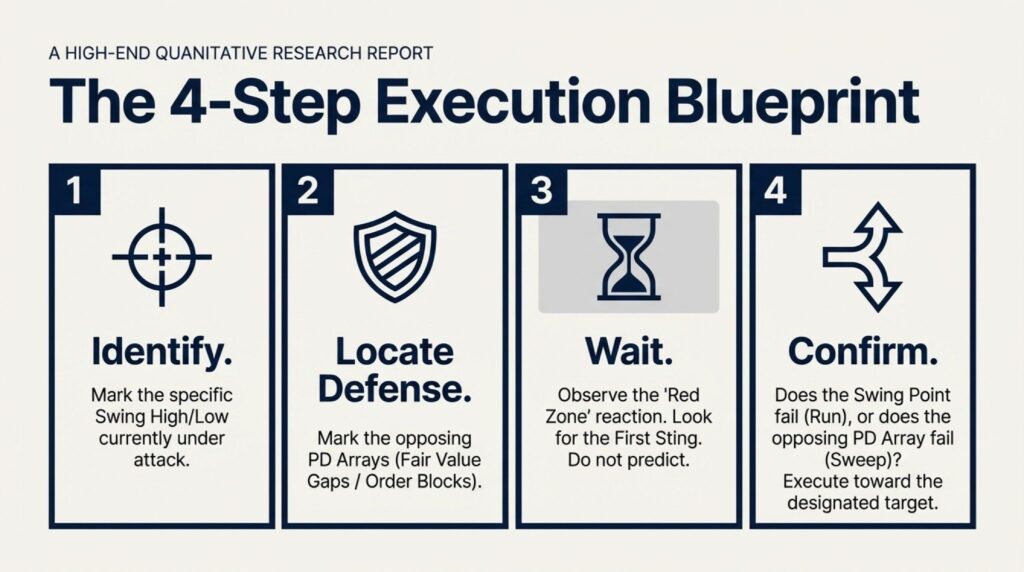
You can start using this today by following these four steps:
- Mark Your Levels: Find the major swing highs and swing lows on your chart.
- Identify the Opposing Level: Find the fair value gap or order block that is pushing against the swing point.
- Watch the Rejection: Look for a “sting” past the level and see how the price reacts.
- Wait for Failure: See if the swing point holds (a run) or if the supporting order block fails (a sweep).
Do not trade in the “red zone” where things are uncertain. Wait for the price to enter the “green zone” after a confirmation. This is where the fast and profitable moves happen.
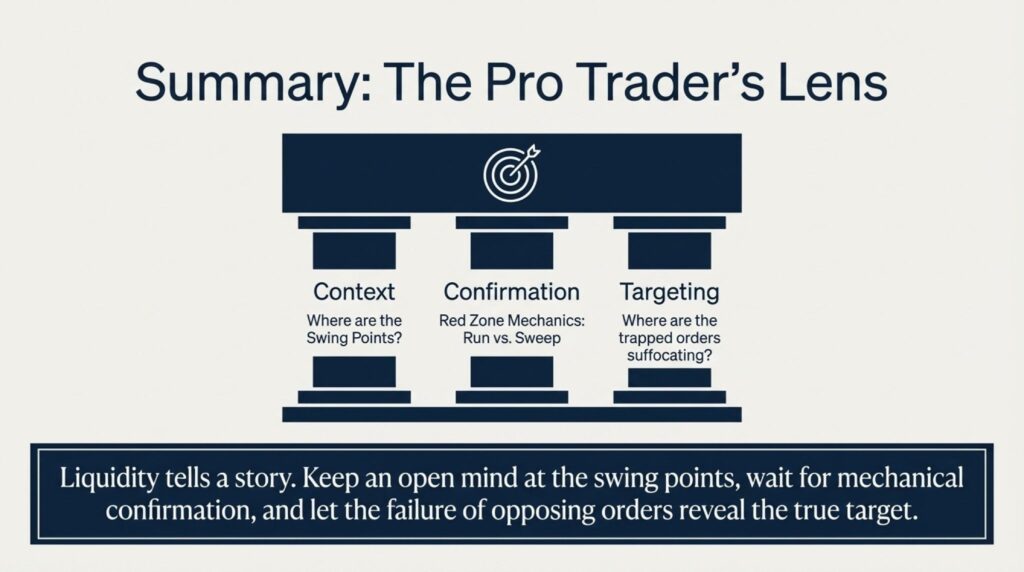
Summary:
Conclusion:
Liquidity is the map of the market. By learning the difference between a sweep and a run, you can stop guessing and start following the real story.
Remember that a sweep leads to a reversal while a run leads to continuation. Use the two-sting pattern to confirm runs and watch for order block failures to confirm sweeps.
If you want to improve your results, spend time marking these patterns on your own charts. Do not just take my word for it.
Open a chart and look at the last ten times the price hit a swing high. You will see these patterns repeating over and over. Practice this daily, and you will soon see the market with total clarity.
Ready to Go Deeper?
If this guide gave you clarity, you’ll love what we share in our weekly newsletter.
Every week we send:
- A real ICT trade breakdown (annotated chart included)
- One ICT concept explained in plain English
- Common mistakes we’re seeing traders make right now and how to avoid them
No spam. No fluff. Just practical ICT education for traders who are serious about improving.
[Subscribe to our free newsletter to get exciting information related to trading.]
You can unsubscribe anytime. But most subscribers tell us it’s the most useful forex email they get each week.
Risk Disclaimer: This article is for educational purposes only and does not constitute financial advice. Trading forex and other financial instruments involves significant risk. Always use proper risk management and consult a financial professional before making trading decisions.